


Palestinian factions agree to reach comprehensive national unity – Middle East Monitor
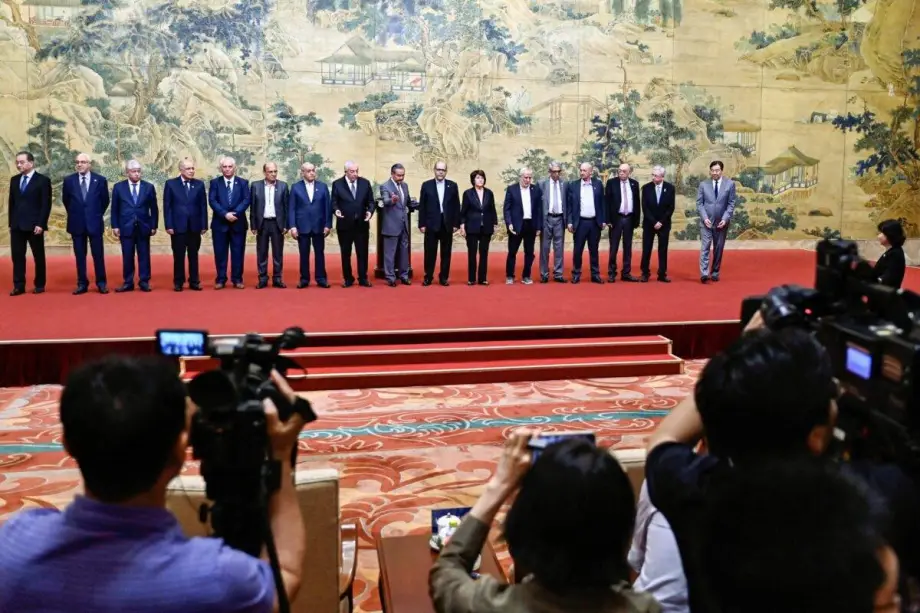
Palestinian factions announced yesterday that they had agreed to reach a comprehensive national unity that includes all forces within the framework of the PLO, and to form an interim national consensus government.
This came in a statement issued at the conclusion of a meeting held between 14 Palestinian factions in the Chinese capital, Beijing, at the official invitation of China.
Fatah, Hamas, Islamic Jihad, the Popular Front for the Liberation of Palestine (PFLP), the Democratic Front for the Liberation of Palestine (DFLP), the Palestinian People’s Party (PPP), the Palestinian Popular Struggle Front (PPSF) and the Palestinian National Initiative (PNI) were among the parties to have joined the talks.
The Popular Front for the Liberation of Palestine – General Command (PFLP-GC), the Palestine Democratic Union (FIDA), the Palestine Liberation Front, the Arab Liberation Front, the Palestinian Arab Front, and the Thunderbolt Forces also participated in the meeting.
The factions said in a statement: “The national factions agreed during their meetings in China to reach a comprehensive Palestinian national unity that includes all Palestinian forces and factions within the framework of the PLO, and to commit to the establishment of an independent Palestinian state with Jerusalem as its capital, in accordance with UN resolutions, and to guarantee the right of return in accordance with Resolution 194.”
“Based on the National Accord Agreement signed in Cairo on 4 May 2011, and the Algeria Declaration signed on 12 October 2022, the factions decided to continue the implementation of the agreements to end the division with the help of Egypt, Algeria, China and Russia,” it added.
In the statement, the factions set four clauses related to the implementation of the agreements to end the division, the first of which is the commitment to establishing an independent Palestinian state. The second clause stipulates “the right of the Palestinian people to resist the occupation and end it in accordance with international laws and the UN Charter, and the right of the people to self-determination and struggling to achieve this by all available means.”
The third is based on “forming an interim national consensus government … so that the formed government will exercise its powers and authorities across all Palestinian territories in a way that confirms the unity of the West Bank, Jerusalem and the Gaza Strip,” according to the statement.
“The government will begin to unify all institutions across Palestinian state territories and begin the reconstruction of the Gaza Strip in preparation for holding general elections under the supervision of the Palestinian Central Elections Commission as soon as possible in accordance with the approved election law,” it continued.
The fourth clause states that in order to deepen the political partnership in assuming national responsibility and in order to develop the PLO institutions, the agreement confirmed the need to activate and standardise the unified temporary leadership framework for partnership in political decision-making in accordance with what was agreed upon in the reconciliation document signed on 4 May 2011. This is until the practical steps to form the new National Council are implemented in accordance with the approved election law.
In this context, the factions in Beijing agreed to “resist and thwart attempts to displace Palestinians from their land (…), and to emphasise the illegality of settlements and settlement expansion in accordance with the Security Council and the UN General Assembly resolutions, as well as the International Court of Justice’s advisory opinion.”
As well as to “work to lift the barbaric siege on Gaza and the West Bank, and the importance of delivering humanitarian and medical aid without restrictions or conditions,” as well as “support the families of the martyrs, the wounded, and all those who lost their homes and property.”
The Palestinian arena has been suffering from political and geographical division since 2007, with Hamas and a government it formed controlling the Gaza Strip, while the West Bank is run by a government formed by the Fatah movement led by Mahmoud Abbas.
READ: Palestinian factions say working to achieve comprehensive unity including all forces

Disney’s entertainment division fuels earnings
Powered by streaming growth, heavy-hitter “Toy Story 5” and the success of television shows such as “American Horror Story: 13” and “Dancing with the Stars,” Walt Disney Co.’s entertainment division powered the company’s earnings for the fiscal fourth quarter.
Burbank-based Disney’s entertainment sector brought in nearly $11.9 billion in revenue for the three-month period that ended Oct. 3, a 17% increase from the year-earlier period. Operating income totaled $1.3 billion, up 92% from a year earlier, which included the comparatively weaker box-office performances of Disney and Pixar’s animated original “Elio” and Disney and Marvel Studios’ “The Fantastic Four: First Steps.”
For the full year, Disney’s entertainment division hauled in about $46.6 billion in revenue, a 10% bump from 2025, with operating income of $5.4 billion, up 16%.
“Consumers around the world, faced with endless options, chose Disney,” the company said in a shareholder letter Tuesday. “Our strong fiscal 2026 results, delivered amid a challenging macroeconomic environment, show we are succeeding on that mission.”
The company brought in $25.9 billion in revenue for the fourth quarter, up 16% from the prior year. Net income totaled $2.6 billion, double the $1.3 billion from the same period last year. Operating income was up 43% to more than $4.9 billion, and earnings per share, excluding certain items, improved 59% from a year earlier to $1.77.
For the full year, Disney reported revenue of $102.3 billion, up 8% from the year prior, with operating income of $19.7 billion, an improvement of 12%.
Despite some continued “headwinds” from international visitation to Disney’s domestic theme parks, the company’s experiences sector reported record revenue and operating income for the fourth quarter and full year.
With growth in guest attendance and guest spending, Disney’s experience’s division reported a 15% increase in revenue to $10.1 billion for the fourth quarter, with 20% growth in operating income to $2.3 billion. For the full year, the experiences division recorded nearly $39.6 billion in revenue, up 9%, and operating income of $11.2 billion, an increase of 12%.
Disney’s sports segment, which includes ESPN, reported revenue of $4.6 billion for the fourth quarter, which climbed 16% from the prior year, with a 53% improvement on its operating income, which totaled nearly $1.4 billion. Disney credited high viewership to the start of the college football season, as well as the NFL.
For the full year, the sports sector reported $18.6 billion in revenue, a 5% increase compared with the previous year and operating income of about $3 billion, up 7%.
As the company heads toward the end of the calendar year, employees are bracing for potentially massive job cuts that are expected as Chief Executive Josh D’Amaro looks to sharpen Disney’s focus and make it more nimble. Already, the company’s human resources and technology division have been hit with layoffs and Disney has separately offered early retirement packages to some older workers.
In its earnings report, Disney said the company expects the planned job cuts to save about $3 billion by fiscal 2029, which the company plans to put primarily toward future growth.

Griffon raises dividend by 14% to $0.25, authorizes $400M buyback
Griffon raises dividend by 14% to $0.25, authorizes $400M buyback
Source link

Premier League: Growing amount of players out to emulate David Beckham
Asmir Begovic holds the record for the longest-range Premier League goal when the goalkeeper scored from 95.7m for Stoke against Southampton in 2013.
Two other goalkeepers have scored from their own half: Tim Howard for Everton against Bolton in 2012 and Paul Robinson, who netted for Tottenham against Watford in 2007.
Yet they were flukes rather than by design – similar to Barrow goalkeeper Ben Winterbottom’s goal from his own half in their 3-0 National League win at Gateshead on Saturday.
Robinson, who also scored for Leeds against Swindon in 2004, external, feels conceding from distance is now a risk managers are willing to take.
The former England international said: “We’ve seen the game evolve in the way where the goalkeeper becomes a key figure in starting a pattern of play. The manager wants the goalkeeper at the base of the back three, four or five.
“But then also we’re seeing a lot more teams playing with a higher line and the goalkeeper then has to take a higher line of starting position to read the through ball.
“When your team are playing a high line, you obviously have to be further up the field and you’re concentrating on where your defensive line is, as opposed to where the football is at times.
“It’s one of those things modern-day managers are willing to accept if and when it does happen, because of the way they want their goalkeeper to play.
“We see so many managers come out now and say: ‘It’s OK. I’m quite happy with them making mistakes. This is the way I want them to play. Blame me because that’s what I’ve asked them to do.’
“We’re probably entering that type of territory with it.”
With attackers aware of the higher starting position of opposing keepers – a result of teams pressing high – and likely to have been encouraged by the success of other long-range efforts across football, attempts from extreme distance are becoming more frequent in the Premier League this season.
The conversion of efforts from more than 50 metres have increased too – up to 5.3% this season, compared to 1.1% across the previous three seasons combined, with Gomez’s strike the first Premier League goal scored from over 50 metres since the 2023-24 season.
It’s a small sample size, so more time is required for clearer trends, at least in the Premier League to be established.
But with more long shots being taken and keepers starting higher, there is a suggestion (and hope) we may see more Goal of the Season contenders before the term is out.
Is Pakistan about to carve out new provinces? Inside the controversial plan | Politics News
Islamabad, Pakistan – Pakistan’s defence minister has said the country could have multiple new provinces as early as the New Year.
“My own view is that New Year will see this, the new system also, God willing,” Khwaja Asif told a private news channel programme this week.
Recommended Stories
list of 4 itemsend of list
Asif, a senior leader of the governing Pakistan Muslim League-Nawaz (PML-N) party, was discussing proposals to carve new provinces out of the existing four: Punjab, Sindh, Khyber Pakhtunkhwa (KP) and Balochistan.
But Asif stressed that he was offering his own assessment. “I have no inside information at this time, and even if I did, obviously I cannot spill it over on a show,” he said.
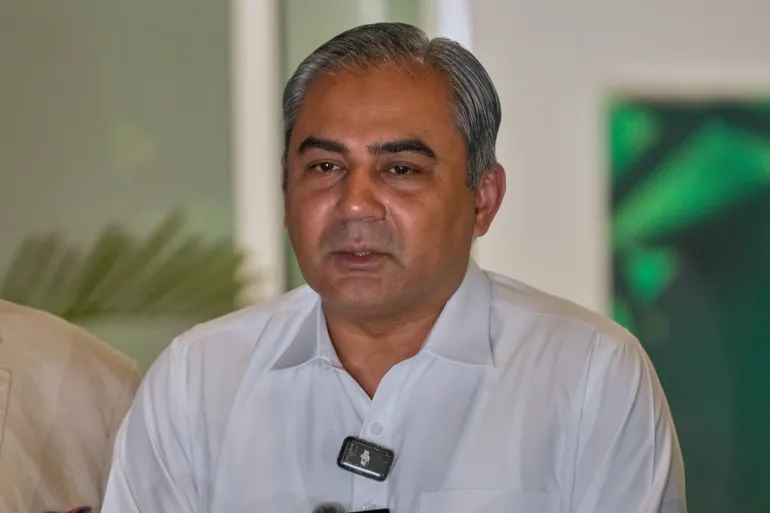
Nearly four months after Interior Minister Mohsin Naqvi first pitched the idea publicly, the proposal appears to be gaining steam. Yet no draft constitutional amendment, agreed number of provinces or timetable have been made public.
Here is what we know about the proposal, the constitutional process, the referendum being discussed to implement it and the concerns raised by political parties:
What is being proposed and why now?
At an economic summit in Islamabad on July 30, Naqvi, considered a close confidant of military chief Field Marshal Asim Munir, said Pakistan needed new administrative units to improve governance.
“Unless units are made and they take ownership and a new leadership comes, this will not happen,” he said.
Planning Minister Ahsan Iqbal has spoken of 12 to 15 provinces to be created through consensus.
Supporters argue that the four provinces are too large to deliver services effectively to a population of about 250 million and a constitutional amendment in 2010 aimed at decentralising powers and resources to districts and cities has not been effective.
“Powers and resources were taken in the name of the people and parked in the chief minister’s house. That is exactly why there is talk of smaller administrative units,” Mustafa Kamal, the federal health minister and a leader of the Muttahida Qaumi Movement-Pakistan (MQM-P), Sindh’s second-largest party, said in television interviews this week.
But Kamal said the federal cabinet had not formally discussed the matter. Asked how many new units were planned, he said he did not know.
“I am also hearing all these things, watching everything, but officially I do not know at all,” he said.
Malik Ahmad Khan, the Punjab Assembly speaker and a PML-N leader, told Al Jazeera that Asif had not explained his timeline.
Kamal, however, pointed to the political calendar: Elections for the Senate, the upper chamber of Pakistan’s Parliament, are due early next year, followed by the federal budget.
“December is a very important month. There are Senate elections ahead. After that, the budget will come in June, so whatever has to happen has to happen before that,” he said.

How can Pakistan create new provinces?
Pakistan’s Constitution recognises four provinces but has no separate procedure for creating new ones. The debate, therefore, centres on Article 239, which governs constitutional amendments.
An amendment requires two-thirds of the total membership of each house of parliament: 224 of the 336 National Assembly members and 64 of the 96 senators.
Under Article 239(4), an amendment changing a province’s boundaries must also win two-thirds support in that province’s assembly before it goes to the president for assent. That would require, for example, 248 of the 371 members in the Punjab Assembly and 112 of the 168 in the Provincial Assembly of Sindh.
“With this specific system in place in the constitution”, no other “route can be used” to try to carve out provinces, Abdul Moiz Jaferii, a Karachi-based constitutional lawyer, told Al Jazeera.
There has been an earlier attempt. In May 2012, the Punjab Assembly unanimously adopted two resolutions moved by Rana Sanaullah, the then-provincial law minister and now an adviser to Prime Minister Shehbaz Sharif, calling for a South Punjab province and the restoration of Bahawalpur province.
In March 2013, the Senate passed a constitutional amendment bill to create a Bahawalpur Janoobi Punjab province.
But it lapsed days later when the National Assembly’s term ended without the lower house taking it up.
Jaferii also questioned whether creating new provinces would necessarily improve governance.
“New provinces would not in and of themselves make government work better. They would allow for smaller administrative units, which in theory are easier to manage. But these units can be achieved without constitutional tinkering with provincial boundaries,” he said.
Could a referendum decide the issue?
Last week, Naqvi told reporters in Lahore that the question of creating new provinces should be put to the public.
“If the people say they should not be made, I am 100 percent with them that they should not be made. If the people say they should be made, then let them be made,” he said.
Article 48(6) of the constitution allows the prime minister to refer a matter of national importance to a joint sitting of parliament.
If the joint session approves it, the matter could go to a referendum that poses a “yes” or “no” question to voters. But legal experts said a referendum’s outcome is not binding on the government.
Malik said the route was legitimate and elected representatives could not disregard the public’s decision.
“Now if the government decides that it has to go to Article 48 and first take the opinion of the public and present before parliament what question they frame, then this is also their right and very much constitutional,” he told Al Jazeera.
Kamal said a referendum remained an option if parties could not agree on an amendment.
Jaferii, however, said a referendum could not replace the constitutional amendment process.
“A referendum cannot be used as a substitute to such a specifically delineated process, nor do referenda allow for the asking of anything but a binary question from the population as a whole, the answer to which is not binding upon those asking it,” he said.
Pakistan has held three referendums, each under a military ruler.
In 1960, about 80,000 local councillors, known as Basic Democrats, were asked whether they had confidence in Ayub Khan, the country’s military ruler and its first field marshal. They said they did.
In 1984, voters were asked whether they endorsed General Zia-ul-Haq’s Islamisation programme with a “yes” counted as a vote for him to stay on as president for five more years.
In 2002, General Pervez Musharraf used one to secure a five-year presidential term.
“Referendum is not a first option – referendum is a second option, just like we have governor rule, emergency clauses in the constitution, but they are not there to be applied regularly, normally,” Majid Nizami, a Lahore-based political analyst, told Al Jazeera.

How much would new provinces cost, and what about money and water?
Currently, Pakistan’s provinces receive 57.5 percent of the federal pool of taxes. This financial year, that amounts to 8.64 trillion rupees ($31.2bn).
Punjab receives 51.74 percent of the provincial share, Sindh 24.55 percent, Khyber Pakhtunkhwa 14.62 percent and Balochistan 9.09 percent. What they get is proportionate to their populations.
However, the constitution does not specify how an existing province’s share should be divided among any new provinces created from it.
The Islamabad-based Policy Research Institute of Market Economy (PRIME) estimated in October that dividing Punjab into three provinces would cost 46.9 billion to 56.2 billion rupees ($169m to $203m) a year.
A stress-test scenario in which all 30 of Pakistan’s divisions became provinces would cost 609.2 billion to 730.3 billion rupees ($2.2bn to $2.64bn), PRIME estimated.
The estimates excluded one-off set-up costs, police forces and full secretariats. PRIME also said equal Senate representation for each province would increase the upper house from 96 to 142 seats if Punjab alone were divided.
Water remains a question too. The 1991 Water Apportionment Accord, which allocates Indus River system water among the four provinces, is not part of the constitution. None of the proposals made public so far has explained how water or financial resources would be shared among any new provinces.
Syed Nasir Hussain Shah, Sindh’s local government minister and deputy general secretary of the Pakistan People’s Party (PPP) in Sindh, said Pakistan’s economy could not bear the cost of additional assemblies, secretariats, chief minister and governor houses, and courts.
“Is making provinces like building a new housing society or setting up a new industry?” he told Al Jazeera.
Nizami also questioned how the proposed administrative units would sustain themselves economically.
“What will their economic model be? What will their growth model be? All of this is unclear right now,” he said.
Where do the PML-N and PPP stand?
The PPP, the PML-N’s main coalition partner nationally, governs Sindh. In September, the Sindh Assembly passed a resolution rejecting the province’s division.
President Asif Ali Zardari, the PPP’s cochairman, met Prime Minister Shehbaz Sharif in Lahore on Saturday.

Local media reported that Zardari reiterated the PPP’s opposition to dividing Sindh.
Shah said Sindh does not need new provinces and the PPP opposed a referendum because the constitution already set out the process. Other provinces, he said, could decide for themselves.
“If the Punjab Assembly has passed that provinces should be made there, then make them there. If the KP Assembly passed that provinces should be made there, then make provinces there,” he said.
Kamal, a former Karachi mayor, rejected that position. “Definitely Karachi should be an administrative unit. Karachi should be a provincial government,” he said in a recent interview with local media. Karachi, Pakistan’s largest city, is the MQM-P’s biggest stronghold.
The PML-N has no formal policy and said it would state its position when the matter reaches parliament. Malik, too, deferred to the party leadership.
“This matter remains the prerogative of the leadership of the party,” he told Al Jazeera.
Naqvi, meanwhile. has said no change will be made without coalition partners’ agreement. “If they all agree, everything will happen,” he said in Lahore.
“Otherwise nothing will.”

Vessels on fire after naval mine hit in Hormuz Strait, Iran says | Oil and Gas
Two vessels have caught fire after hitting a naval mine in the Strait of Hormuz, Iran’s Islamic Revolutionary Guard Corps says. One of the ships was reportedly carrying two million barrels of crude oil.
Published On 17 Nov 2026

I’m A Celeb’s Chloe Burrows retches and shakes as she forces down bull’s testicle
CHLOE Burrows bites off more than she can chew after taking part in Tuesday evening’s gruesome eating trial on I’m A Celebrity… Get Me Out Of Here!
The former Love Island star is one of ten new faces in the Australian jungle – but camp life gets off to a shaky start as she competes for stars with Wayne Rooney.
In grim scenes from Tuesday night’s instalment, Chloe, 31, takes part in the show’s notorious eating trial – and first up for the horrified TV personality is a generous serving of bull’s testicle.
Served with noodles and garnished with fermented salt, the dish – playfully dubbed ‘Nad Thai’ by hosts Ant McPartlin and Declan Donnelly – has the potential of earning her a crucial star for camp, but only if she chews and successfully swallows one grisly mouthful.
Observing from the opposite end of their outdoor table, former Manchester United ace Wayne struggles to contain his laughter as she visibly retches.
Claire Sweeney was exempt from taking part, having just competed against AJ Odudu to keep her place in camp.
READ MORE I’M A CELEB HERE


Geordie hosts Ant snd Dec previously told how the jungle chef has been “getting creative” and would be serving up “culinary twists” for the celebrity campmates – and Tuesday’s trial doesn’t disapooint,
It comes little more than a day after Wayne and Chloe downed fermented prawns and blended fish eyes.
The campmates were seen putting their stomachs to the test as they spat out a “prawn-star martini” on Monday evening.
Wayne and Chloe raced against Ade Adepitan, AJ Odudu, Jack Skipper and Mariella Frostrup.
The celebs had to drink the “martini” and spit it out into a cup next to them until they could read the word written across the bottom of their glasses.
AJ finished last in the trial, while the rival group of celebrities – Joanna Page, Sharky, Ricky Wilson, Claire and Leomie Anderson – faced something else entirely.
They were forced to scale a moving truck whilst locating and igniting three flares.
Claire was the slowest to complete the trial and ended up facing AJ in a showdown to see who would keep their place in camp.
Much to fans dismay, AJ appeared to be axed from the show – before she’d even stepped foot in camp.
Ant told her: “You can head off, transport awaits to take you out of the jungle.”
A shellshocked AJ was understandably deflated, saying: “I came here to be part of this adventure and meet all of these incredible people and I’m just so gutted my time has been cut short.
“I really genuinely tried my hardest but I’m really gutted. I feel like I’ve let myself down…”
But is that really the end of AJ or do jungle bosses have other plans in store for her?
To find out more tune into I’m A Celebrity…Get Me Out Of Here! Monday at 9pm on ITV1, STV & ITVX.
Daré Bioscience expects DARE to PLAY dispensing to begin in November across 28 states
Earnings Call Insights: Daré Bioscience (DARE) Q3 2026
Management View
- Sabrina Johnson (CEO, President, Principal Financial Officer, Secretary & Director) framed the quarter around active commercialization, saying, “Flora Sync LF5 is in the market” and “dispensing is planned to commence later this month” for DARE to PLAY Sildenafil Cream, while adding, “Two of our
Seeking Alpha’s Disclaimer: This article was automatically generated by an AI tool based on content available on the Seeking Alpha website, and has not been curated or reviewed by humans. Due to inherent limitations in using AI-based tools, the accuracy, completeness, or timeliness of such articles cannot be guaranteed. This article is intended for informational purposes only. Seeking Alpha does not take account of your objectives or your financial situation and does not offer any personalized investment advice. Seeking Alpha is not a licensed securities dealer, broker or US investment adviser or investment bank.

How NBC turned the news into long-running hit shows
Over 100 years, NBC’s radio and TV news operations recorded history and made some as well.
Radio listeners tuned in to NBC were the first to learn of the 1938 Munich Agreement. On Nov. 24, 1963, NBC had the only live TV shot of the basement of Dallas police headquarters, where nightclub owner Jack Ruby gunned down Lee Harvey Oswald, the man charged with assassinating President Kennedy. Tom Brokaw was the only U.S. news anchor to be at the Berlin Wall when it fell in 1989.
But the network’s lasting legacy is the programs it created that have been part of the TV landscape for decades. The oldest is the Sunday public affairs staple “Meet the Press,” which began on the radio and came to NBC television in 1947. It will celebrate its 80th anniversary next year. Here is how the enduring franchises of NBC News evolved over the network’s long history.

“Meet the Press” moderator Kristen Welker interviewing President Trump during his 2024 campaign to return to the White House.
(William B. Plowman / NBC)
From Huntley-Brinkley to ‘Nightly’
NBC’s first regular TV newscast, the 15-minute “Camel News Caravan,” debuted on Feb. 16, 1949, with John Cameron Swayze, who started his network career in Hollywood. A former actor, Swayze became known for his ability to memorize scripts, which came in handy when a teleprompter malfunctioned.
But the first network news anchors to become major stars were Chet Huntley, a Montana native who worked for NBC in Los Angeles and David Brinkley, a wry North Carolinian who covered the White House for the network. They were paired for “The Huntley-Brinkley Report” in 1956, with Huntley based in New York and Brinkley in Washington. Their emergence cemented the habit of watching the network evening newscast and demonstrated how strong a bond audiences could form with the anchors beamed into their homes every night.
Their sign-off, “Good night, Chet. Good night, David,” became a pop culture phrase that helped make them wildly popular. Female fans proclaimed their love for the anchors. One woman went so far as to plant herself outside Brinkley’s Washington home with a suitcase before police moved her along.
“The Huntley-Brinkley Report” was far more popular than the “CBS Evening News with Walter Cronkite” in the first half of the 1960s. In 1965, the NBC newscast was the highest-grossing program on TV, taking in $27 million a year, the equivalent of $283 million in 2026.
The Huntley-Brinkley habit was disrupted by a 1967 strike by the American Federation of Television and Radio Artists. Brinkley stayed off the air during the labor dispute, but Huntley crossed the picket line. “It caused problems,” said Michael Sokolow, a media historian and professor at the University of Maine. “The audience thought they were no longer good friends.”
By the end of the decade, the audience’s attachment to NBC’s duo was waning as Cronkite’s popularity grew, fueled by his enthusiasm for the U.S. space program. His emotional response to the moon landing in 1969 broke from the stoicism that was characteristic of newscasters at the time.
Huntley retired in 1970, and NBC renamed its program “NBC Nightly News.” That opened the path for Cronkite’s broadcast to become the dominant ratings leader until he gave up the anchor chair in 1981.
NBC News did have a history of taking a more populist approach in story selection. Jonathan Wald, a former NBC News producer, recalled how his father, Richard Wald, who ran the division in the 1970s, gave the go-ahead for “NBC Nightly News” to make the death of Elvis Presley the lead of the broadcast. “CBS Evening News” opened with a report on the Panama Canal treaty.
But the newscast didn’t see first place again until well into Tom Brokaw’s 20-year stint in the anchor chair. When veteran news producer Andrew Lack became president of NBC News, he recognized that Brokaw’s Middle America background could resonate with the audience. ABC’s urbane Peter Jennings, the ratings leader in the 1990s, was more strongly associated with international coverage. Lack countered by having Brokaw concentrate on issues close to home.
“Brokaw was listening to America, that was in his DNA, but he needed a framework around him that deployed that focus every day,” Lack said.
When O.J. Simpson was arrested in 1994 for the murders of his ex-wife, Nicole Brown Simpson, and her friend Ron Goldman, there was no hesitation at NBC News to immerse viewers in the coverage. “I thought it was the biggest story in the country from Hour One,” Lack said.
The Simpson case propelled “NBC Nightly News” from third to first in the ratings. The program has kept it a competitive race ever since, under Brokaw’s successors Brian Williams, Lester Holt and Tom Llamas.
This is ‘Today’
The growth of television at the start of the 1950s quickly altered the habits of consumers, cutting into the number of books they read, the movies they attended and their hours of radio listening. But there was no network TV programming before noon until Pat Weaver, an advertising executive who went on to become president of NBC, came up with “Today.” He envisioned it as “a national newspaper of the air,” bringing in live pictures and reports from around the world.
“Today” launched in 1952 from the RCA Exhibition Hall facing Rockefeller Plaza in New York, letting pedestrians look in on host Dave Garroway and, soon after, his chimpanzee sidekick J. Fred Muggs. The program eventually moved into the bowels of 30 Rockefeller Plaza as New York was considered too dangerous in the late 1960s for a street-level studio. “Today” returned to the Plaza in 1994, attracting tourists from across the country and deepening fans’ connection to the program.

Al Roker of NBC’s “Today” outside of the morning program’s Rockefeller Center studios.
“Today” made morning television the most lucrative segment of the TV news business. NBC expanded the franchise across four hours.
The durability of “Today,” and the trust viewers placed in it, helped the franchise through crises. The worse came when Matt Lauer, the most popular male co-anchor in the program’s history, was fired in 2017 over allegations of sexual misconduct. Hoda Kotb stepped up to fill Lauer’s chair and made history with Savannah Guthrie as the first all-woman anchor team on a network morning program.
“No matter how big the talent is, no one is bigger than the ‘Today’ show,” said Lack, who terminated Lauer. “But Savannah and Hoda were perfect that morning, and went on to be a great team.”
From prime time to crime time with ‘Dateline’
When “60 Minutes” became a big hit in the 1970s, network news divisions no longer had tacit permission to be financial loss leaders. News could make money and the prime-time newsmagazine was the route. ABC launched “20/20,” which became a hit after a rocky start. But NBC struggled with the format, launching 17 shows that failed before coming up with “Dateline” in 1992.
The program co-anchored by Jane Pauley and Stone Phillips got off to an auspicious start. Then it suffered one of the biggest scandals in TV news history, when NBC admitted it had used incendiary devices to help illustrate a story on how General Motors trucks were unsafe due to their gasoline tanks being mounted on the sides of the vehicles. After GM pulled its advertising and threatened to sue, Pauley and Stone delivered a 3½-minute on-air apology.
Lack, who was hired as NBC News president in part to manage the fallout from that devastating mistake, said the network considered canceling “Dateline.” But NBC stuck with the program, hiring successful newsmagazine producer Neal Shapiro from ABC to take it over. He overhauled the show into a dependable hit that the network used to plug multiple holes in its prime-time schedule, pushing the money-losing news division into profitability during the 1990s.
The narrative approach at “Dateline” helped the program adapt to changing audience tastes. As cameras were allowed in the courtroom in the mid-1990s, TV news had pictures for real-life legal dramas. “Dateline” was mostly true crime by 2006 and has became an even bigger moneymaker for NBC News as its yarns are repackaged for syndication to local TV stations, ad-supported streaming channels and podcasts.

Josh Mankiewicz, Blayne Alexander, Lester Holt, Keith Morrison, Dennis Murphy and Andrea Canning of NBC’s “Dateline.”
(NBC News)
The Kornacki Cam and the streaming future
By the mid-1990s, cable was in more than half of all U.S. homes, and viewers who wanted news on demand, not on the broadcast networks’ schedule, could turn to CNN.
In 1996, NBC teamed with Microsoft to launch its own 24-hour service, MSNBC.
Although MSNBC was not an immediate ratings success, it became a talent incubator for NBC News. Evening news anchors Lester Holt and Tom Llamas began their NBC careers at MSNBC. Williams also honed his anchor skills on MSNBC before he succeeded Brokaw. Williams was suspended and removed from “NBC Nightly News” in 2015, when the network found he had made inaccurate statements about his reporting in Iraq. MSNBC resurrected his career with “The 11th Hour,” a program that played to his interviewing skills.

NBC News chief data analyst Steve Kornacki breaks down midterms data in New York on Nov. 3, 2026.
(NBC News)
But as cable matures and struggles to stay vital amid cord-cutting, MSNBC was spun off in January. The progressive-leaning cable network is now called MS NOW. NBC is focused on providing news for the streaming audience, making its free ad-supported streaming news channel NBC News Now its platform for 24-hour news.
During the 2026 midterm elections, the network gave viewers the option of a livestream of the “Kornacki Cam,” where the network’s data maven Steve Kornacki dug into election returns. His segments were woven into NBC’s broadcast coverage and the network sees it as a model for the future.
“We’re bringing together the best of broadcast and digital to give audiences more choice in how they experience our journalism, across platforms and at different levels of depth,” said Rebecca Blumenstein, president of editorial for NBC News. “That’s what NBC News has done for the past 100 years, and how we’ll continue to evolve for decades to come.”
Vitor Matos: Swansea City head coach edges closer to Strasbourg
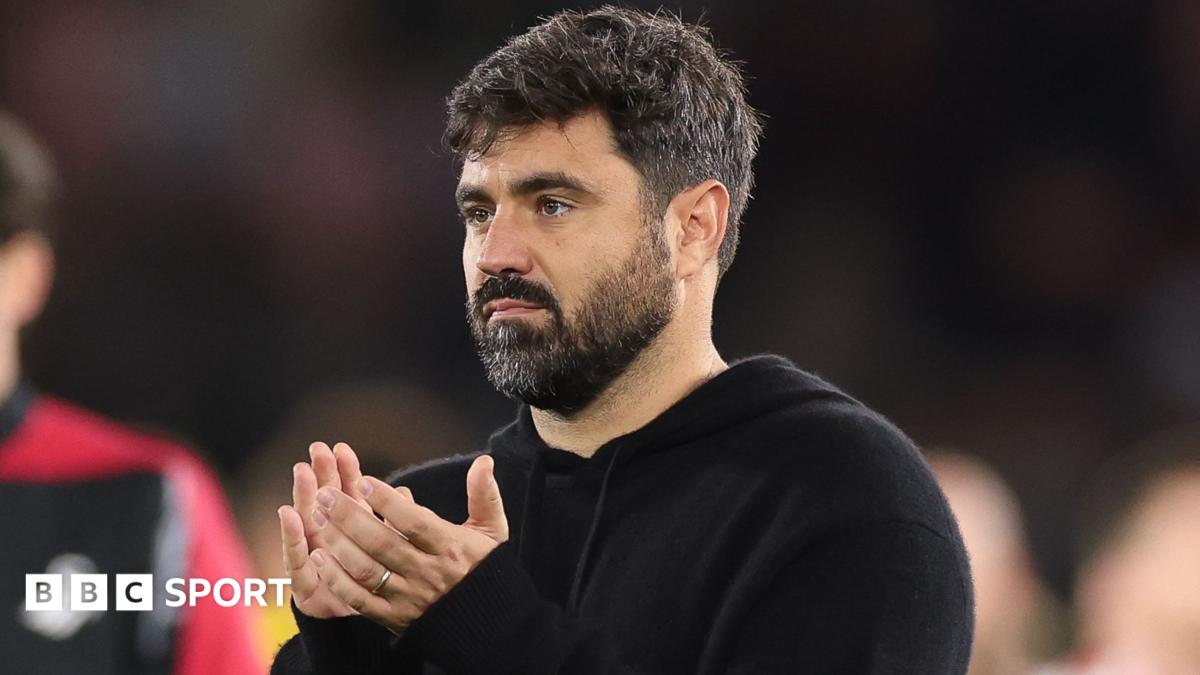
Vitor Matos is edging closer to leaving Swansea City to take charge of French top-flight club Strasbourg.
Strasbourg have made an official approach for the Swansea head coach, who looks likely to depart even though there is no agreement yet between the clubs over a compensation package.
Matos was at Swansea’s training ground on Tuesday morning, but is understood to have indicated that he is interested in leaving the Championship side.
Matos is under contract until 2030, meaning Swansea will be due significant compensation should he depart.
But that has not stopped Strasbourg targeting the 38-year-old Portuguese, who had been due to celebrate a year in charge at Swansea later this month.
Current Strasbourg boss Hugo Oliveira, Matos’ fellow countryman, is under pressure after a run of five defeats in six matches.
Oliveira has managed only three wins in 10 league games since succeeding Gary O’Neil – who left to take over at Ipswich Town – in July.
O’Neil led Strasbourg to an eighth-place finish last season, but they are currently 13th in Ligue 1, only two points above the relegation zone.
Strasbourg are a sister club of Premier League side Chelsea.
Matos has turned Swansea from potential relegation contenders to promotion hopefuls since taking charge, with the club 20th in the Championship when he took over last November.
The Swans finished 11th last season and have made further strides in the first third of this campaign.

Immersive art experience Hopscotch is ready to awaken San Pedro’s waterfront
Immersive art firm Hopscotch will on Dec. 11 open a multiroom, walk-through experience, one filled with floor-to-ceiling wonderlands, giant, grown-up-ready ball pits and photo-ready destinations designed to dazzle guests.
Hopscotch is coming to San Pedro’s West Harbor, a long-in-the-works waterfront development initially pegged to have its grand opening last year but just now beginning to launch in phases. The space adds to the growing roster of L.A.-area immersive locations opening soon or in the works.
In the coming weeks, Hopscotch will be joined by Meow Wolf, whose experiential destination is destined for West L.A. Further out but in development is a permanent location of the Museum of Ice Cream in West Adams, and just announced for Anaheim is the first full U.S. exhibition from Tokyo’s TeamLab.

Hopscotch co-founder Nicole Jensen says the space is designed for play.
(Christina House / Los Angeles Times)
“We’re fans,” says Hopscotch co-founder Nicole Jensen of its soon-to-be-peers in the booming immersive art world of SoCal. “In our opinion, there can never be enough art in the world.”
San Pedro’s Hopscotch, the third of the company’s locales after opening spaces in San Antonio and Portland, Ore., has been in the works since 2021. Jensen expects it to be about a 90-minute experience for most guests.
It deviates from other social media-ready art spots with a number of thoughtful rooms that aim to get attendees out of their everyday headspace. Look for a partnership, for instance, with the Human Rights Campaign, as well as a room that seeks to get visitors to open up and be vulnerable.
“We’re all about play and creativity and connection,” Jensen says. “We want you to feel your most authentic self when you’re at Hopscotch, so you can access the play part of your brain.”
Expect plenty of interactive installations, especially those that play with color, light and movement. Here’s a deeper dive into what Hopscotch has to offer.

Hunter Inman, right, and Nicole Jensen, co-founders of Hopscotch, in the space’s introductory room, “Gaze,” a collaboration with the Human Rights Campaign.
(Christina House / Los Angeles Times)
Hopscotch begins with a mission
The first major gallery room in Hopscotch is a maze of 44 transparent, light-infused structures developed in partnership with the Human Rights Campaign (Jensen has served as a member of its board of governors). Dubbed “Gaze,” its clear structures are etched with messages of celebration and unity that reflect HRC’s mission as an LGBTQ+ civil rights organization.
Look, for instance, for glowing purple-pink kittens cheering for “purrrride.” Elsewhere, a wall reflects the local area, providing a light green vision of West Harbor’s ultimate map, and a blue panel is laced with words of inspiration.
“I approached them a few years ago and said I want to bring your messages to life,” Jensen says of the HRC. “So we take messages that are normally on posters, websites and shirts and bring it to life. It’s called ‘Gaze,’ because it’s gazing into a future of love and acceptance for all.”

Hopscotch will feature an installation in which guests listen to the confessions of strangers.
(Christina House / Los Angeles Times)
Listen to the confessions of strangers
One of the most striking installations in Hopscotch is “Secrets,” from Texas studio Wide Awake Creative. Here, guests can enter soundproof telephone-booth-like rooms to either listen to the revelations of strangers, or leave one of their own. The hope, says Jensen, that it is a “shared cathartic experience.” When Hopscotch opens, it will play the secrets of guests from its other locations, but eventually visitors will hear words spoken solely by SoCal attendees.
They’re individually vetted, of course, and Hopscotch has rooms dedicated for grown-ups and children. There’s a wide range, from lighthearted to serious, be it guests expressing fear they’ll never again find love, or just stressing about introducing a partner to their parents. They’re all relatively short, so expect to spend some time listening to strangers get vulnerable. In five years across two locations, Hopscotch has collected more than 400,000 confessions.
“We want it to be as natural and authentic an experience as possible,” Jensen says. Adds co-founder Hunter Inman, “We were surprised when we first did it. We were surprised at how serious some of the sharing was.”

Nicole Jensen, co-founder of Hopscotch, illustrates how the venue will respond to the movements of guests.
(Christina House / Los Angeles Times)
A place to bounce, create and play
It’s not all so serious. Hopscotch ultimately is about play and wonder. That’s why, for instance, it has an adult-sized ball pit. Or a room called the “Quantum Trampoline,” created by international studio Kuflex. Bounce or hop, and each movement is transformed into cosmic-like swirls and twirls. And, of course, Hopscotch has its own version of a mirrored room of hanging lights to mesmerize visitors.
One particularly interactive room is a digital graffiti wall from artist Todd Moyer. Guests, about four or five at a time — Hopscotch intends to pulse people through its 10 installations — can pick up virtual spray cans to decorate computerized brick and concrete walls. From there, attendees will wander into a cotton candy-like explosion of warmth, albeit one designed entirely of thousands of upcycled plastic bags and salvaged fishing nets from artist Barbara Goszczynska. It’s a cavern of soft colors with some not-so-hidden benches and the occasional mirror to create an illusion of a grander space.
Here, too, Hopscotch wants to bridge the worlds of playfulness and thoughtfulness. The rainbow cave, says Jensen, “makes us reconsider our relationship with objects we overuse as a society.”

Onetime San Pedro resident Darel Carey created a large-scale outdoor-indoor mural for Hopscotch.
(Christina House / Los Angeles Times)
Local San Pedro connections
Hopscotch tapped onetime San Pedro resident Darel Carey for a large-scale, indoor-outdoor mural that runs the facade of the building. Carey’s black-and-white, kaleidoscope-like lines are designed as a sort of optical illusion, intended to blur the lines between the inside and outside of the space.
Carey spoke of being influenced by flower blooms in creating the shapes for the spot, and inside Hopscotch the art will serve as the space’s introductory lounge, which will sell walk-up food and beverages, alcoholic and non-alcoholic. Visitors can grab a bite or a beverage without buying a ticket to the full exhibition.
Hopscotch intends to be open daily and tickets will be priced at $25 or less. “We try to make it easy for people to come back again,” Jensen says.
As for why San Pedro, Jensen and Inman say they fell in love with the community soon after touring it in 2021. Jensen was sporting an Arts Open San Pedro shirt on the day of the interview, and cites the area’s arts district as a source of inspiration. But the latter, Jensen adds, could be found just outside the Hopscotch doors.
“Honestly, when you’re down here on the water and these massive ships go by, you feel like a kid again,” Jensen says.
Tuesday 17 November Day of Freedom and Democracy Czech Republic and Slovakia
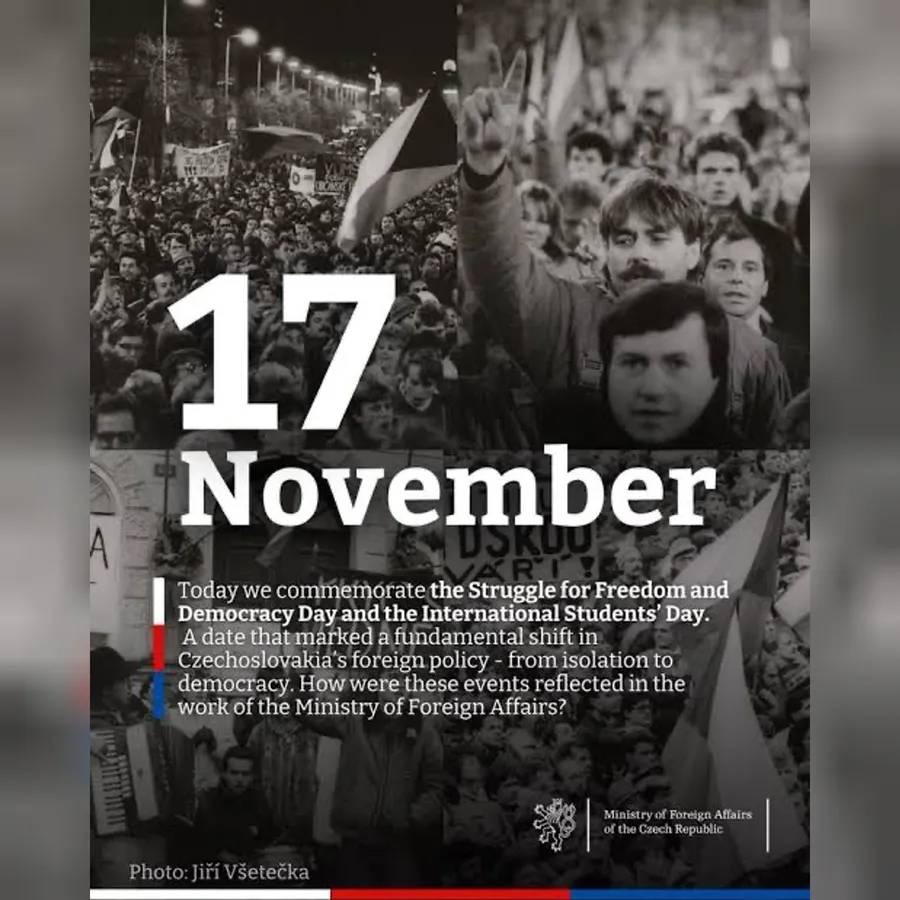
The provided text details the historical significance of the Day of Freedom and Democracyobserved on November 17th in both the Czech Republic and Slovakia. It highlights how the twentieth century brought severe hardship to these regions, including Nazi occupation during the Second World War and subsequent decades of communist administration until 1989. Throughout these turbulent eras, student activists consistently spearheaded major nationwide resistance movements against oppressive governance. Specifically, the date marks the tragic 1939 crackdown by Nazi forces on the University of Prague, which resulted in severe casualties and the imprisonment of numerous scholars. Furthermore, this date honors the 1989 Velvet Revolution, a series of peaceful demonstrations initiated by a student-led memorial march that ultimately dismantled the communist regime and led to new democratic leadership.
Why are five EU countries reviving plans to deport migrants to Rwanda? | European Union News
Five European Union countries have announced a deal with Rwanda under which it is set to host rejected asylum seekers.
On Monday, Rwanda joined Austria, Denmark, Germany, Greece and the Netherlands in announcing the scheme in Vienna, with a plan to begin transfers by 2027.
Recommended Stories
list of 3 itemsend of list
The governments say the deal would speed up the removal of people with no right to remain in Europe, while rights groups say it could expose vulnerable people to abuse.
Here’s what we know.
What is the scheme?
The five governments want to establish a “return hub” in Rwanda – a facility outside the EU where migrants ordered to leave member states can be transferred, even if they are not from Rwanda.
The proposed scheme would apply only to people in the five countries who are subject to enforceable removal orders, including rejected asylum seekers. The governments would cover the costs, including temporary accommodation.
According to a joint statement, those transferred “will have the opportunity to integrate into the society of Rwanda”. Alternatively, they could voluntarily return to their home country or travel to another country they can legally enter, with assistance from Rwanda and international organisations.
A formal agreement has yet to be signed, and the governments have not specified how many people they intend to transfer. There were 669,365 first-time asylum applications across the EU in 2025, according to figures from the European Commission. On average, 45 percent of these are approved. However, European officials said last year that about 90 percent of rejected applicants remain in the bloc overall.
Why Rwanda?
Dutch Deputy Prime Minister Bart van den Brink said Rwanda was chosen for its “considerable experience” in receiving large groups of migrants and its close cooperation with the UN Refugee Agency (UNHCR) and the International Organization for Migration (IOM).
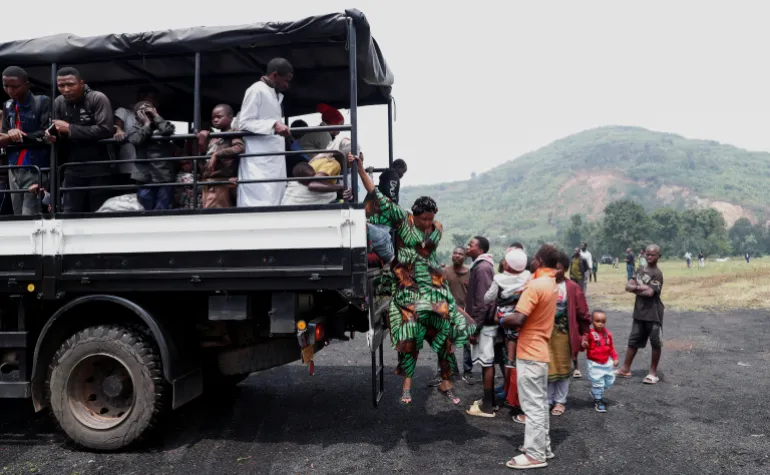
Rwanda has long hosted large numbers of refugees, most of them from the neighbouring Democratic Republic of the Congo and Burundi.
But over the years, it has also cut deals with several governments to receive deportees. Between 2013 and 2018, Israel deported thousands of Eritrean and Sudanese migrants to Rwanda under a secretive deal.
Rwanda received another 3,000 migrants transferred from Libya in a deal with UNHCR and the African Union in 2019. Last year, Rwanda agreed to accept hundreds of deportees from the United States, with the first seven arriving later that month.
Rwandan Interior Minister Vincent Biruta said the new scheme would offer people with no right to remain in Europe a “second chance”.
A background paper released on Sunday envisions a “cost-efficient and sustainable model”, in which the five EU states would cover the hub’s direct costs and fund integration and migrant welfare projects they say would also benefit Rwandans and aid the country’s development.
The joint statement says the arrangement would form part of an “equal and mutually beneficial partnership” between Rwanda and the five countries, covering not only migration but other areas of common interest.

Didn’t the UK try a similar scheme?
Yes, but that deal, signed in 2022 by the former ruling Conservative government, went a bit further than this. Rather than transferring people after their asylum claims had failed in the United Kingdom, all asylum seekers who arrived in the UK “irregularly” were to be transferred to Rwanda to have their claims assessed there. Those granted asylum would be resettled in Rwanda rather than the UK.
In 2023, the UK Supreme Court ruled the plan unlawful, finding that those transferred would face a real risk of refoulement – being forcibly returned to countries where they could face abuse.
UNHCR, which opposed the plan, told UK courts that Rwanda’s asylum system was inadequate to receive the asylum seekers, among other objections relating to safety and human rights.
The scheme was eventually scrapped in 2024 after the UK’s Labour Party came to power, though by then London had paid Rwanda about 290 million pounds ($390m) under the scheme. Only four people had relocated to Rwanda, all voluntarily.
Under the latest scheme, the five EU states say they would only transfer people who have already been legally processed for asylum and found not to need protection.
German Interior Minister Alexander Dobrindt said this difference made the two plans “incomparable”.
UNHCR, which challenged the aborted UK scheme in courts, is now advising Rwanda and the five EU governments on whether this new plan complies with international human rights law.
What are the humanitarian concerns?
Rights groups have objected to the plan despite Rwanda’s promise of independent monitoring and UNHCR’s involvement, objecting to third-country deportations, in principle, and to Rwanda’s human rights record.
A coalition of 47 groups, including the International Rescue Committee, warned that the deal means people could be torn away from lives built in Europe to countries where they may have no family or networks.
The coalition pointed to the experience of asylum seekers whom Israel deported to Rwanda. “When Israel deported people to Rwanda and Uganda, they were promised status and safety. But research indicates that many were driven on to dangerous onward journeys and into the hands of human trafficking networks,” the coalition said.

Human Rights Watch (HRW) opposed the deal, saying that such third-country transfers were documented to lead to abuses for the deportees, including “arbitrary detention, ill-treatment, destitution” and other serious abuses.
“History has shown that third-country transfers violate rights and cause suffering,” said HRW’s Judith Sunderland.
Amnesty International said similar schemes in the past had proven “unlawful, unworkable and expensive”.
Rights organisations also point to Rwanda’s human rights record as cause for concern. In its report for 2025, Amnesty International wrote of Rwanda: “Forced evictions associated with urban development projects in the capital disproportionately affected low-income and marginalised populations. Labour rights protections were limited, and structural barriers impeded trade union activity. Civic space remained severely restricted and political opposition members faced unfair prosecution.”
HRW said the scheme to send failed asylum seekers would fall short of the EU’s requirement that partner countries respect international human rights law.
The rights group added that four of the five EU countries involved in the deal had raised concerns about Rwanda’s human rights record at the United Nations just this January.

Russia’s Prized Kerch Bridge Struck In Ukrainian Drone Onslaught (Updated)
The Kerch Bridge, one of Russia’s most strategically important and heavily defended pieces of infrastructure, spanning the Kerch Strait between Krasnodar Krai in Russia and the Kerch Peninsula of Crimea, has been struck again. The latest attacks came amid a massive Ukrainian overnight offensive that Moscow says involved 1,336 long-range drones.
Update: The Russian-installed head of Crimea, Sergey Aksyonov reported a second attack on the bridge in less than 24 hours.
The Russian-installed head of occupied Crimea, Sergey Aksyonov, confirmed that the crossing, which includes both automotive and rail lanes, had been targeted earlier today, announcing temporary traffic restrictions while authorities assessed the situation.

The attack reportedly occurred at approximately 5:38 a.m. local time, with a Ukrainian one-way attack drone striking one of the bridge’s arches. Russian air defenses were reportedly engaging incoming drones around the structure.
Video purportedly showing the moment of the attack includes the appearance of a straight-winged, propeller-driven drone with the twin booms and inverted-V tail that is a feature of several different Ukrainian strike drones.
The extent of the damage remains unclear, but there are now very visible signs of the main road span on the Kerch side of the bridge having been hit.
Footage broadcast on Russian television first showed the significant damage to the crossing. The main road span looks to have sustained a direct hit to its superstructure, with visible deformation of the structure. Reportedly, the original footage was subsequently removed by the Russian broadcaster.
One early report suggested that the affected arch was leaning at an approximately 15-degree angle. While certainly leaning, the precise angle has not been independently verified.
Meanwhile, satellite imagery confirms signs of damage to the bridge following the overnight attack, including around the arch of the road crossing, consistent with what we can see in the Russian television report. The imagery also appears to show dark marks, possibly scorch marks, at the opposite end of the main road span, although these may not be related to the latest attack.
Any kind of damage to the arch is noteworthy given the importance of the bridge’s supporting structure, although it is not yet possible to determine to what degree the structural elements impacted have been compromised.
Russian authorities were quick to indicate that traffic would resume following an inspection; the crossing remained closed long into the day. However, by the afternoon, Russian media were reporting that the bridge had reopened, albeit only in one direction at a time, although accompanying video footage appeared to deliberately avoid showing the damaged arch, and vehicles moving across the bridge were also absent from the available clip.
Kremlin spokesman Dmitry Peskov characterized the damage as minor.
Nevertheless, approximately 2,000 vehicles were reportedly stranded in queues on either side of the crossing following the disruption. Rail services also experienced delays. It must also be taken into consideration that a partial reopening of the bridge to road traffic could also be a hubristic measure, and not necessarily a reflection of the true condition of the bridge structure.
The attack is particularly notable given the history of Ukrainian efforts to disable the bridge, which remains a critical logistical connection between Russia and the Crimean peninsula, illegally annexed by Moscow in 2014.
A recurring target for Ukraine
Ukraine’s sustained campaign against the Kerch crossing has involved several different methods since Russia launched its full-scale invasion in February 2022.
The first major attack occurred on October 8, 2022, when a truck carrying explosives detonated while crossing the bridge. The resulting blast damaged sections of the roadway and ignited fuel tankers aboard a train traveling across the adjacent railway span.

The attack temporarily disrupted traffic across the crossing and represented a significant security failure for Russian authorities. Ukraine’s Security Service (SBU) subsequently acknowledged its involvement.
A second major attack followed on July 17, 2023, when Ukrainian forces employed domestically developed Sea Baby uncrewed surface vessels (USVs) against the bridge.
The naval drone attack damaged the road section, forcing another temporary closure. It also demonstrated Ukraine’s ability to threaten the crossing from the maritime domain despite the increasingly extensive defensive measures Russia had established around it.
Russia subsequently reinforced its defenses, deploying additional air defense systems and installing floating barriers, metal barges, and boom defenses intended to complicate attacks from the water.
Ukraine nevertheless demonstrated that the bridge remained vulnerable in June 2025, when the SBU carried out an underwater demolition operation targeting its support structures.
The agency said explosives equivalent to more than 1.1 metric tons of TNT had been detonated beneath the bridge following months of preparation. The SBU described the operation as having damaged underwater structural elements.

Part of a much larger drone offensive
The latest Kerch Bridge strike came amid what the Russian Ministry of Defense described as one of the largest Ukrainian drone attacks of the war.
The Russian Ministry of Defense claimed its air defenses intercepted or destroyed 1,336 Ukrainian drones overnight across multiple regions, including occupied Crimea and areas around the Black Sea and Sea of Azov. The figure exceeds Moscow’s previous reported overnight interception record of 1,254 drones on October 29.
Russia subsequently reported a total of 2,049 drones intercepted over 24 hours, including the 1,336 overnight figure. Added to that total, per the same source, were four Flamingo cruise missiles and seven guided aerial bombs.
The actual number of drones launched by Ukraine is unknown, and the Russian claims have not been independently verified.
Moscow Mayor Sergei Sobyanin separately claimed that approximately 600 drones had been directed towards the capital and surrounding region.
The reported barrage also affected industrial and energy infrastructure, with fires reported at several facilities in Russia’s Rostov region and elsewhere.
Again, these figures have not been independently verified and represent Russian official claims rather than a confirmed count of the total number of drones launched by Ukraine.
Nevertheless, the reported scale of the operation highlights the growing geographical reach of Ukraine’s long-range uncrewed attack campaign and the challenge facing Russian air defenses as they attempt to protect an expanding list of strategic sites.
The Kerch Bridge is an especially important target in this context. Beyond its enormous symbolic value as a signature infrastructure project associated with Russian President Vladimir Putin, it provides a major road and rail connection for moving military personnel, equipment, and supplies between mainland Russia and occupied Crimea.

Its disruption can therefore have consequences beyond the immediate damage to the structure itself, particularly if restrictions persist or repeated attacks force Russia to divert resources into its protection.
For Moscow, the latest incident also raises questions about the effectiveness of the defensive measures installed following the 2022 and 2023 attacks.

The massive overnight drone offensive also comes just days before an unprecedented trilateral summit in Shenzhen involving Putin, Chinese President Xi Jinping, and U.S. President Donald Trump, scheduled for November 19.
The meeting, taking place on the sidelines of the Asia-Pacific Economic Cooperation (APEC) summit, is expected to focus on broader issues of international security, including nuclear arms control and strategic stability. U.S. officials have indicated that Russia’s war against Ukraine is not expected to be featured in the trilateral discussions, despite Moscow’s interest in bringing the conflict to the table.
The timing nevertheless provides an important backdrop to the latest Ukrainian attacks. Kyiv continues to pursue a campaign against Russian military and strategic infrastructure while diplomatic efforts to end the nearly five-year war remain stalled.
For Putin, the summit offers an opportunity for direct engagement with Trump and Xi at a time when Russia’s military campaign in Ukraine continues to face significant challenges. The latest drone barrage, meanwhile, underscores Ukraine’s ability to bring the war to targets deep inside Russia, including infrastructure with considerable strategic and symbolic importance.
Whether Monday’s reported strike caused more significant structural damage to the Kerch Bridge remains uncertain, although initial imagery certainly seems to point toward that. The results of this attack may well also encourage Ukraine to immediately do whatever it can to retarget and strike that exact weakened point in an attempt to deal a more fatal blow to the bridge.
Contact the author: thomas@thewarzone.com
BBC confirms This City is Ours replacement after ‘masterpiece’ crime drama ends
Gritty crime drama This City Is Ours has come to an end, but it won’t be long before the new season returns.

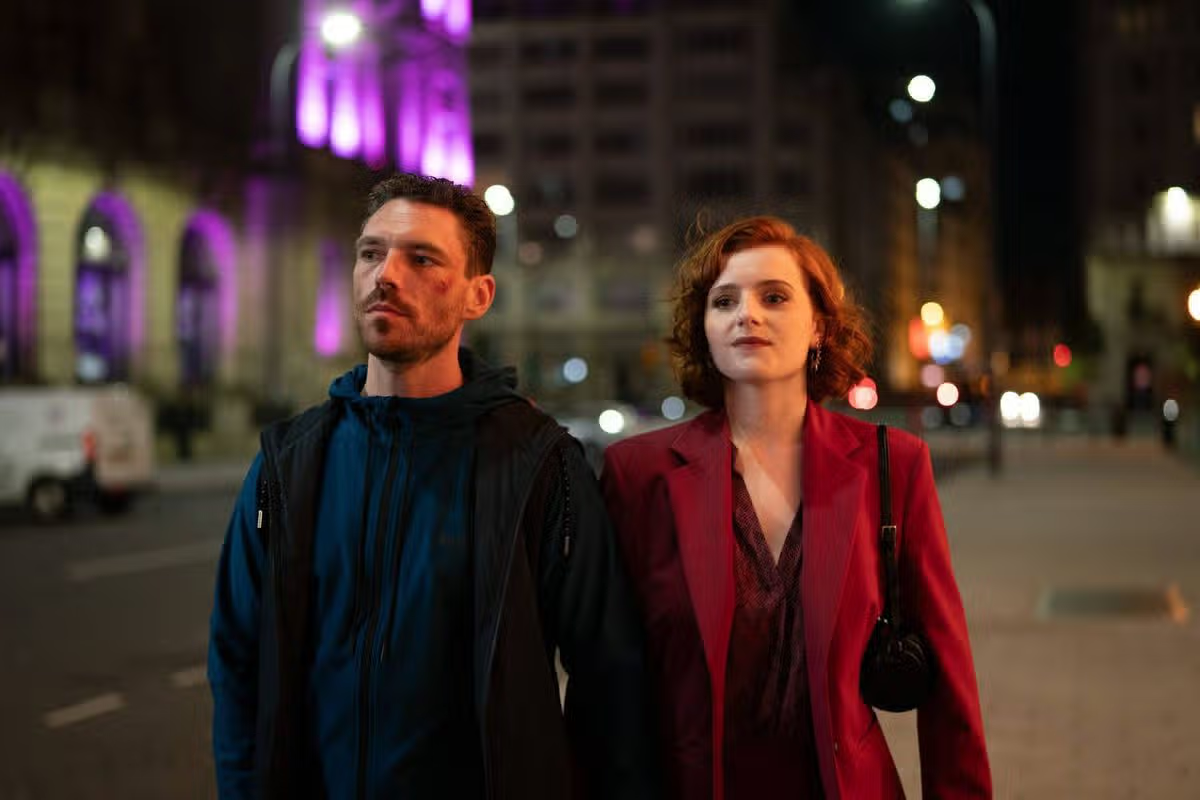
Viewers have hailed This City is Ours as a ‘masterpiece’ (Image: BBC/Left Bank Pictures/James Stack)
The BBC has confirmed a new drama will be replacing This City Is Ours.
The gritty crime drama, which was hailed a “masterpiece” came to an end on Monday night with its second season. The BBC has already confirmed that a third installment will follow, and is set to commence filming in Liverpool next year.
Season two saw cast members returning including James Nelson-Joyce, Hannah Onslow, Jack McMullen and Julie Graham. The finale left viewers “heartbroken” and begging for more, with the BBC having previously teased: “Picking up from where things were left at the end of series one, Michael and Diana have barely arrived in Spain when they are dragged back into the fold to answer questions around Ricardo’s death.
“Back in Liverpool, tensions continue to bubble amongst the remaining members of the gang. Meanwhile, an old school gangster from Ronnie’s era, recently out of prison, wants compensation from the firm.”
It’s now been confirmed that a new drama will be airing from Sunday, November 22, taking the slot that had been held by This City Is Ours.
A new ghost story, set in the Welsh countryside, is hitting screens. The Witch Farm is a drama inspired by first-hand accounts, theories and real events explored by the BBC podcast of the same name by Danny Robins.
Set in South Wales in 1989, the synopsis teases: “ Bill, Liz and Bill’s teenage son Jonathan leave London for Heol Fanog, a remote farmhouse in the foothills of the Brecon Beacons, determined to make a fresh start. At first the isolation feels like freedom, but when frightening, inexplicable things begin to happen around the house and a strange figure appears the family starts to feel increasingly scared.
“What follows is a steady escalation of the chillingly uncanny – unexplained disturbances and an unsettling sense that they are not alone.
**Ensure our latest TV stories always appear at the top of your Google Search by making us a Preferred Source. Click here to activate or add us as Preferred Source in your Google search settings**
“As Bill and Liz begin to investigate the house draws them deeper into a history that refuses to stay buried. And as the land yields its secrets, so too does their marriage – testing their limits of trust, belief, and what they’re willing to deny in order to survive.”
Speaking about bringing the story to life, writer, creator and executive producer Danny said: “I read about this couple, Liz and Bill Rich, who’d had this terrifying experience in the remote Brecon Beacons in Wales. The more I dug into it, the more it felt like something that merited a long-form approach and so we made the podcast series called The Witch Farm.
“Through that process, I met Liz and she told me her incredible story. We also found other witnesses and pieced everything together through a mix of audio drama and documentary.
“Once again, it was a big hit and the question was, what next? Telling the story again as a documentary on television didn’t feel right, but dramatising it and turning it into a different beast absolutely did!”
He added: “I absolutely want people to feel scared, but I also want them to be moved by it. It’s an incredibly powerful and emotional story, that was one of the things that grabbed me when I first came across it for the podcast. It’s particularly moving towards the end as we shift through the gears of this story.”
The Witch Farm airs from Sunday, November 22, at 9pm on BBC One and iPlayer.
European airport forced to close and cancel all UK flights due to ‘urgent repairs’
A POPULAR European airport has been forced to close following storm damage.
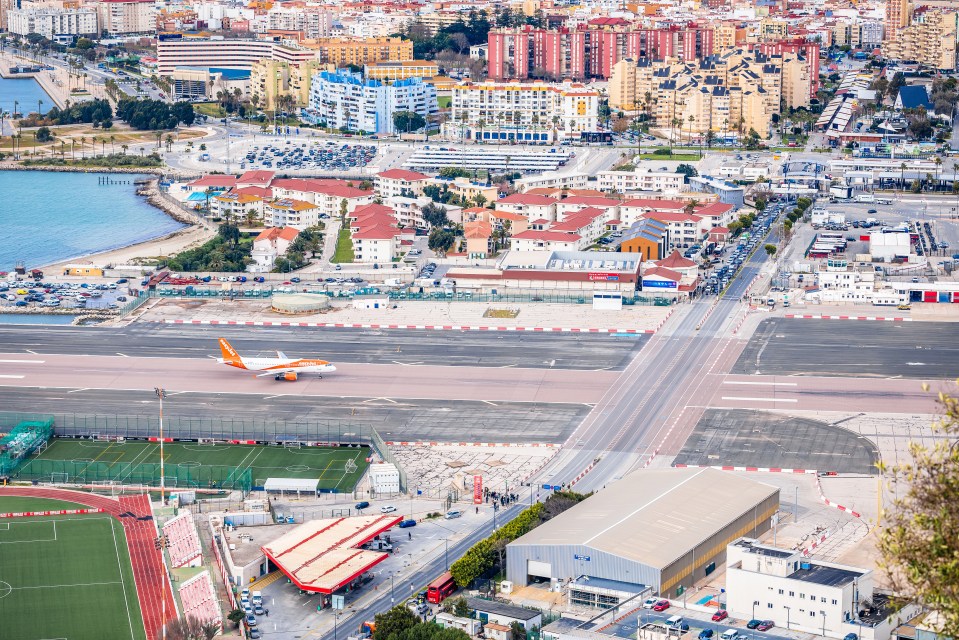
Joshua Hassan Gibraltar International Airport was shut midday Monday following equipment damage caused by water from severe weather.

The airport will remain closed until midday Wednesday with all flights either cancelled or diverted in the meantime.
According to the Gibraltar Chronicle, British Forces Gibraltar said the closure is to allow engineers to urgently repair infrastructure that helps the air traffic service at the airport.
The closure will impact three flights today, including an easyJet flight from Manchester and two British Airways flights from London Heathrow – one this morning and one this afternoon.
This morning the easyJet flight has been diverted to Malaga in Spain – more than an hour and half’s drive away.
Read more on travel inspo


Passengers are being advised to check their flight status with their airline before travelling.
However, travellers will generally not be entitled to compensation as the incident is considered an ‘extraordinary circumstance’ outside of the airlines’ control.


A spokesperson for British Forces Gibraltar said: “The MoD have suffered water ingress to one of their buildings located at the top of the Rock which has led to water affecting vital communications equipment.
“The temporary closure is necessary to allow remedial works to be completed safely, and every effort is being made to restore normal operations as quickly as possible.
“We recognise the inconvenience this may cause and thank passengers and operators for their patience and understanding.”
Sun Travel has contacted Joshua Hassan Gibraltar International Airport for comment.

High school basketball: Monday's scores
CIF City Section and Southern Section high school boys’ and girls’ basketball scores for Monday, Nov. 16.
Source link
As Knesset readies for new speaker, Israeli opposition holds powerful role | Benjamin Netanyahu News
The anti-Netanyahu bloc holds the keys to electing a new parliamentary speaker, setting the momentum for change.

Published On 17 Nov 2026
As soon as last month’s Israeli election results were clear, the political camp opposed to Prime Minister Benjamin Netanyahu announced it would work together to elect a new Knesset speaker right away.
In Israel’s current political climate, electing the Knesset speaker is not merely a procedural matter. Many in the anti-Netanyahu bloc hope it will usher in important changes to state institutions and create a positive momentum that would reflect on efforts by Gadi Eisenkot, now the de facto leader of the opposition, to form a government without Netanyahu, his coalition partners, or their legacy. These may be over-optimistic expectations.
Recommended Stories
list of 3 itemsend of list
A powerful position in the Knesset, the Israeli parliament, could be a strategic asset for the Netanyahu opposition.
Under the law, the Knesset speaker has the power to set the agenda of the legislature, preside over proceedings, and manage the parliamentary process under the Knesset Rules of Procedure – including convening parliament for and presiding over a vote of confidence in the government.
Eisenkot and his political allies in the so-called “Change bloc” agreed on their nominees for speaker and the chairs of key committees. The request to hold a vote to elect the speaker was filed when the 26th Knesset was sworn in on November 10. The vote will be held in the Knesset on Tuesday.
Arab-led Israeli parties have pledged support to ensure a majority to elect Matan Kahana of Eisenkot’s Yashar party as speaker. The recently elected deputy speaker, Ahmad Tibi, leader of the Joint List, told Al Jazeera his powerful political alliance of Arab-majority parties would do whatever they need to support a change in the speaker of the Knesset. “We need to get rid of the Netanyahu coalition as soon as possible,” he added.
Matan Kahana recently joined Yashar, but he is not new to politics. He has served as an elected parliamentarian before, starting in 2019 as a member of former Prime Minister Naftali Bennett’s right-wing alliance, Yamina. In 2022, he was part of the National Unity alliance, a parliamentary bloc formed by Eisenkot and former Defense Minister Benny Gantz, among others.
Within the predominantly right-wing Netanyahu opposition bloc, Kahana is seen as someone who can forge working relationships and push ahead with the legislative agenda Change bloc voters supported.
Once a speaker is elected, the anti-Netanyahu bloc can make good on their promises. This includes introducing legislation to form an independent commission of inquiry into the October 7, 2023, Hamas-led attacks on Israel, which the Netanyahu coalition has so far blocked despite the majority of Israelis backing it.
The anti-Netanyahu parties also want to restore the powers of the attorney general and reverse the Netanyahu coalition’s major changes that weaken the powers of the judiciary and, the opposition says, prevent effective oversight of the government.
Another piece legislation of concern to Netanyahu is a law that would impose a two-term limit on the premiership. This would disqualify Netanyahu from becoming prime minister again.
These important laws can be introduced and voted on while coalition negotiations continue and while Netanyahu is the caretaker prime minister.
However, Israelis who headed to the polls in historic numbers to end Netanyahu’s nearly two-decade grip on power will surely welcome the undoing of part of his legacy.
‘We’re a capitalist society’: Grindr defends $120 a month premium tier
The world’s largest LGBTQ+ dating app, Grindr, has defended its $120 (£91) per month premium subscription service, which launches globally today.
Edge offers AI-powered services such as daily personalised profile recommendations that aim to provide better matches and limit scrolling.
The company’s CEO, George Arison, told BBC News it would be a “very different Grindr experience” which was aimed at a “small community of users” – and was unapologetic about its cost.
“I think we’re a capitalist society, and everything hinges on whether you can afford it or not,” he said.
Grindr has long had a free service, and offers two additional tiers that cost between $22.99 and $44.99 per month.
There was a mixed reaction from users BBC News spoke to in San Francisco to the new, much more expensive version of the app.
“The current premium Grindr tier is already really expensive,” said a user named Rybin, who told the BBC the company’s newest offering “just seems really out of touch with the community.”
“I think that that’s really disheartening, and it kind of leaves a bad taste in my mouth,” said another user, Adrian.
Both declined to give their last name.
“The cost doesn’t bother me,” said a user named Michael. “All of these apps have premium tiers so saying that Grindr shouldn’t have that when like it exists across all these other apps used for connection doesn’t make sense.”
He noted that high-end dating apps like The League can charge much more.
The best moments we saw at Camp Flog Gnaw 2026
Fans of current music and fashion know that November in L.A. isn’t just fall, it’s Flog Gnaw season. As thousands of faithful fans of rapper Tyler, the Creator’s annual two-day Camp Flog Gnaw can attest, it is a time for celebrating our city as a center of hypebeast culture and to also enjoy a big weekend of the many different shades and textures of hip-hop, R&B, rock, electronic music and more in the festival grounds of Dodger Stadium. This year’s fest on Saturday and Sunday had a stacked lineup of big names from Don Toliver to Lola Young and Turnstile with Tyler bringing everything to a roaring close on Sunday night. Here’s our recap of the best things we saw this year.
Don Toliver’s set is a “Party With the Boys”
Just one day before he closed out Camp Flog Gnaw on Saturday night, Don Toliver told radio host Zane Lowe that his highly anticipated sixth studio album, “Nitrous,” is nearly finished and shared a new track titled “Party With the Boys.” If fans hadn’t already heard the melodic, psychedelic-trap record embedded with arcade-like synths before his headlining set, it was likely stuck in their heads by the time they left.
“I’m about to drop an album, and I just want to play my song,” Toliver told the audience before dropping for a third time. At one point, a group of people, disguised in blinding white hazmat suits to match the all-white stage design, appeared onstage with Toliver, bouncing and dancing around him wildly as he crooned the hypnotizing lyrics. (The music video for “Party With the Boys” had more than 1.5 million views on YouTube as of Sunday morning.) He also replayed the cinematic anthem “Gemstone” from his latest album, “Octane,” multiple times.
Still, Toliver, who was backed by background singers, a small band and orchestra, made time to play several songs off “Octane” including “Body,” “ATM,” “Excavator” and “E85” along with a handful of older cuts like “No Idea” and “Cardigan.” Toward the end of his vivacious set, he also performed his unreleased track “Clap” and “Solar Eclipse,” his collaboration with Drake off the rapper’s “Habibti” album, both of which he’s performed only a handful of times.
Fan reactions were split. While some left early, complaining that he didn’t perform enough of his catalog, others stuck around and gleefully chanted the lyrics with Toliver: “She just wanna party, wanna party with the boys.” Either way, Toliver made sure that his upcoming “Nitrous” was impossible to ignore. — Kailyn Brown

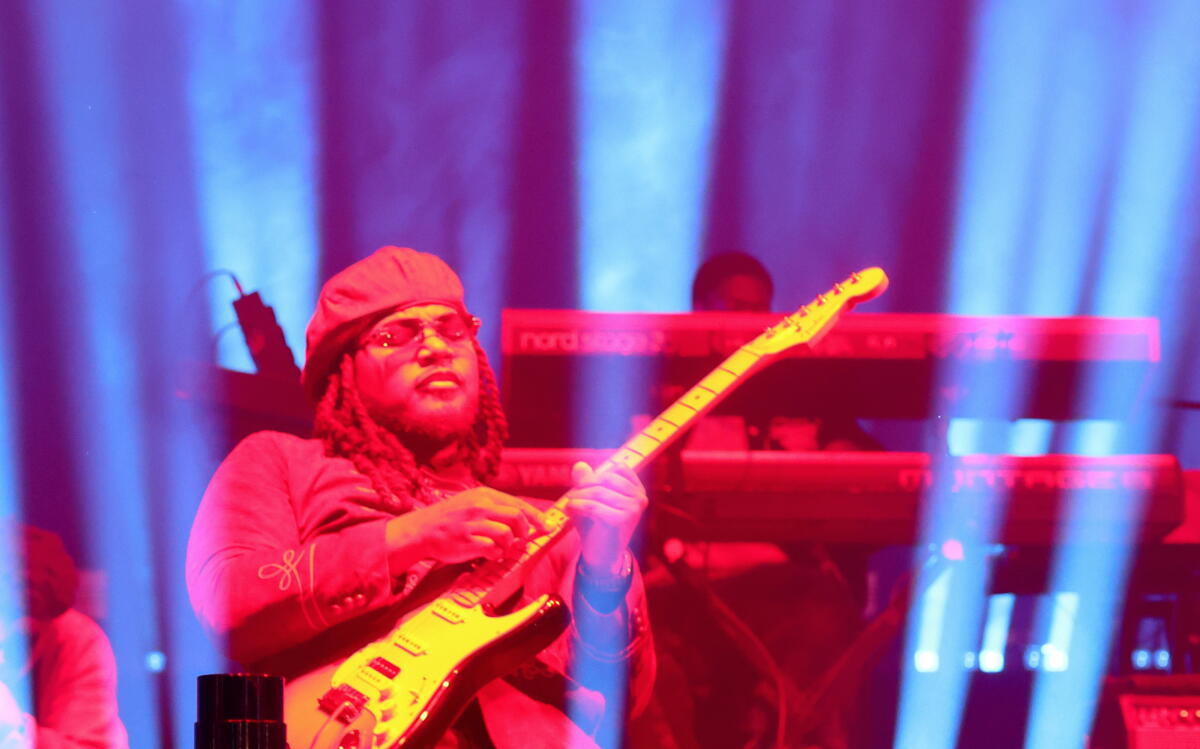
Leon Thomas performs on the Flog stage during Camp Flog Gnaw at Dodger Stadium.
(Evan Schaben / For The Times)
Leon Thomas hits all the right notes
When I interviewed Leon Thomas in December, he told me that he likes to bring an energy of “cutting heads” to his live performances.
“Sometimes I go see R&B artists live and it’s very chill,” he said, but “the school I come from is competitive.”
This was more than apparent when the singer-songwriter, who plays five instruments including bass and drums, hit the stage Saturday night. Backed by a live band, he kicked off his electric set with the self-assured “How Fast,” in which he sings “Oh Lord, I’m a visionary” before floating into several tracks off his Grammy-winning 2024 album “Mutt” including a beloved mashup of his track “Yet it is” and Floetry’s 2003 hit “Say Yes.”
There was no question if the mic was on as Thomas hit his signature vocal runs, all while ripping on his bass alongside his bandmates then hopping onto the drums. Near the end of his set, he performed his latest track, “Trophy,” a velvety slow burn made for the bedroom, further cementing himself as one of his generation’s most dynamic vocal performers. — K.B.

Lola Young performs on the Camp stage during Camp Flog Gnaw.
(Evan Schaben / For The Times)
Lola Young’s return receives Flog Gnaw fanfare
Just a year ago, Lola Young canceled every tour date on her calendar and said she had to disappear. Young had suffered from mental health and substance-use issues in her past, and the pressures of sudden fame caught up to her. “I’m going away for a while. It pains me to say I have to cancel everything for the foreseeable future,” she wrote in September 2025. “ Thank you for all the love and support. I’m so sorry to let anyone down who has bought a ticket to see me, it hurts me more than you know.”
It must have felt amazing, then, to walk out to a sold-out Camp Flog Gnaw and see tens of thousands of fans thrilled to have her back. Young’s brash, vulnerable music sits in that exquisitely British lane between pop, rock, R&B and soulful singer-songwriter work, and the work she put in to get back to herself was evident. “D£aler,” a funny, frustrated single about cutting off the source of your struggles, was a highlight off her album “I’m Only F— Myself,” and on Saturday it had the lightness that comes from knowing you made it through. She sang strikingly pained and resonant low notes on “Post Sex Clarity” and “Spiders,” and even on those songs about confusion and desperation, she delivered them with a poise and resonance. “Messy,” her breakout hit, remains a fan favorite, but here it felt in the past tense, and all the better for it. — August Brown

Turnstile vocalist Brendan Yates leaps while drummer Daniel Fang performs behind him on the Camp stage.
(Evan Schaben / For The Times)
Turnstile are the princes of P.M.A.
Last month, I saw a banger joke in response to someone criticizing Turnstile songs as three minutes of one riff while Brendan Yates yells about the power of friendship. “Yes that’s called ‘hardcore music’ and it’s what young men used to do in this country before the CIA built Adin Ross,” the fan replied. Both takes are true. Turnstile are the sort of relentlessly P.M.A. (Positive Mental Attitude) type of hardcore-adjacent band that can be life-altering or cornball. But man, the world really needs young men to be circle-pitting instead of stewing online among fetid white nationalists or sports-betting crypto grifters.
That’s why it’s hard to feel anything but delight that Turnstile has become an arena band that can kill a No. 2 slot at a festival like Flog Gnaw. Its LP “Never Enough” blended the band’s Baltimore basement-show ethos with ambitious synthscapes, clubby pulses and Police-indebted guitar textures from new guitarist Meg Mills (and won the group a couple of Grammys). The musicians are still nasty in the breakdowns and relentlessly creative rhythmically (the ever-shirtless Daniel Fang is a star in his own right), even as they’ve become the one punk band everyone but punk fans can agree on. I can’t tell if Saturday’s little between-song video montages of fans extolling the bliss of the pit were lore-building or set-padding, but no band leaves you feeling as exalted and hopeful as a Turnstile festival set, and this was no exception. — A.B.
Jane Remover keeps the late afternoon energy up
O.K., I’ll admit it. I was late to the Jane Remover set, failing to be front and center for her “Beauty Sleep” opener around 4:05 p.m. But that didn’t matter; as I ascended Vin Scully Avenue at a brisk pace, it would have been impossible to miss Remover’s unmistakable opening and the whir of the fans that came with it.
By the time I dropped by the box office and scurried over to the Flog stage, she was about a quarter of the way through her performance. Still, she maintained a level of energy that suited the crowd, who moshed relentlessly, ebbing and flowing with her screams.
On stage, she wore all black: leather bottoms, a cropped tee adorned with safety pins, and fingerless gloves. Over the years, Remover has floated between genres, initially hyper-pop before decrying the movement. Nowadays, she’s more like digicore, perhaps, rage rap. Regardless, I’m losing track of them, and she’s still putting on a show.
— Julius Miller
2hollis makes fans lose their minds
Can you recall the moment you first began to feel old? For me, it was a couple of weeks back, at a Halloween party in Silver Lake. I caught sight of a man whose costume was highlighted by a long, draping blond wig. It was obvious to me: This is Lucius Malfoy from the Harry Potter series.
I was correct, but my fellow partygoers weren’t. As the man explained, they’d all guessed he was 2hollis. This escaped me; I’d heard the name but never put a face to it. At this year’s Flog Gnaw, I was able to do so.
One part was true. 2hollis does indeed have long, pale blond hair, which hangs just past his shoulders. On both sides of his three-tiered stage — much like a podium — were backup dancers dressed in all white. You‘d think you might hear gospel or industrial music but, no, this was something else.
“I need you to kill whoever the f— is next to you!” he screamed, as a festivalgoer cast a worried glance my way. He went on shrieking, screaming and jumping all across stage, while his dancers performed pirouettes en pointe.
I turned to the person next to me and asked, “What do you think of this?” She answered, “It’s different, but I like it.”
And I think that’s a great synopsis of 2hollis’ essence. Hyper-pop is different now; what used to be a subgenre or anything adjacent to it is now on a huge stage, before thousands of wailing fans.
Sure, he’s faced the routine nepo-baby claims. His mother, Kathryn Frazier, is a publicist who founded the label OWSLA alongside Skrillex. His father, John Herndon, was the drummer for Tortoise. But who really cares?
The crowd certainly didn’t. They lost their minds, just as 2hollis dropped to his knees, extended a hand and issued another command: “I need you to lose your f— mind! Come on,” he said. —J.M.
Tyler, The Creator’s love–hate relationship with the crowd
Which installment of Camp Flog Gnaw is this? Tyler doesn’t know: “This might be Year 12 or 13 or 15, I lost count,” he said. “But to everybody that came out, we appreciate you so f— much, thank you so f— much.”
It’s crazy to think that Tyler has been making music since around 2007. The days of “Bastard,” “Goblin” and “Wolf” are gone, and he’s well aware of that. There’s much more melody, considerably more harmonies and a much bigger fan base than there ever was.
“Six nights at Crypto / S—, I should have did SoFi,” he rapped during an electric performance of “Tweakin’.”
This year, he pulled out all the stops: a World War II-era bomber plane, flagmen to direct flight and an aviator outfit. He appeared in the cockpit and went straight into “St. Chroma.”
It took a bit for Tyler to hit his stride this go-around. Before weaving in and out of “VCR” and “Blow My Load,” and just after a joke about how he “loves giving head” and “has a problem,” he set up for “Sugar on My Tongue.” This is when the crowd picked up and responded to his performance, as he began spinning and shuffling onstage.
It was an altogether great show and a display of how far Tyler has come as an artist. The Hawthorne-born, three-time Grammy-winning rapper has carved out an identity for himself. On every project, he innovates — switching styles like a chameleon and pulling them off with minimal turbulence.
Still, he cracked at the audience, “I hope that set list was good enough for you complaining ass, b— a— n—… Actually, f— all of y’all, I hate all you motherf—.”
Never change, Tyler. —J.M.
Syd brings calm, cool energy at sundown
Syd has played Camp Flog Gnaw nearly every year since its founding. But after taking a break last year, the R&B singer said she’s a little “nervous and anxious” for the homecoming set. Coming off the July release of her third album, “Beard,” the L.A.-born singer delivered an equally sultry and buoyant blend of newer solo songs, and OG hits from her band, the Internet.
Between tracks, she told the crowd about how she first found herself working as a “self-taught sound engineer” from her bedroom and became a part of Odd Future, the mid-2000s L.A. rap group that birthed the festival’s founder Tyler, the Creator and many others. But with roots in genre-defining groups like Odd Future and the Internet, she said being a solo singer wasn’t something she saw for herself.
“You never know where opportunity is going to take you,” she said onstage.
Even if she didn’t see it for herself, the crowd definitely did, forming dance circles and chanting during the buzzy chorus of “You’re the One” and the alluring “Special Affair.” The mutual love the singer had for the festival, for the crowd, full of family and fans alike, and for Los Angeles itself was felt. —Cerys Davies
Steve Lacy brings his signature silly swag
Besides a quick shout-out to LeBron James, there wasn’t much space in Steve Lacy’s Sunday night set to chat. The guitar-powered artist was determined to play as many songs as possible, from the stripped-back strums of his early-career hit “Dark Red” to the latest gaggle of songs from his newest album, “oh yeah?”
A lot has changed for the singer since he last took the Camp Flog Gnaw stage in 2018. Now, the L.A.-born musician, dressed in reflective pants and knee-high boots, is a Grammy Award-winning artist with a handful of ultra-viral pop choruses to his name.
On Sunday night, a shirtless Lacy brought his signature silly swag to the dense crowd, which was sprinkled with many teenagers dressed as Spider-Man (in reference to Lacy’s recent appearance on the latest Marvel movie soundtrack).
Between the heartfelt sincerity of “nothing” to the straightforward groove of “C U Girl,” Lacy was shining bright under a revolving disco ball light, providing the ultimate spotlight for his blunt, confessional style of songwriting.
“Let’s yearn, baby. Yearn,” he declared onstage, before playing his anthem of unrequited love “the feeling.” —C.D.
Future is still the man
The Atlanta rapper, cloaked in a dense layer of fog, was determined to deliver his most L.A.-centric set possible, as he dedicated the entire performance to the “real California.” Besides a few lasers and pyrotechnic bursts, Future kept it simple. He breezed through snippets of his most popular tracks and features like “Good Kush and Alcohol (B— Love Me),” “Superhero (Heroes & Villains),” “Mask Off” and “Bugatti” — each one eliciting a new layer of excitement from the crowd.
To complete his dedication to the L.A.-focused set, Ty Dolla Sign came out for “Blasé” (and a heartfelt tribute to Mac Miller with “Cinderella”) while YG capped the set with “BPT” and “Hollywood.” Sexyy Red also jumped onstage to sing both “Looking for the Hoes (Ain’t My Fault)” and “Get It Sexyy.”
Sometimes it’s hard to remember how many hits and eras Future is a part of. But when he’s live and transitioning from “New Level” into “F— Up Some Commas,” it’s nearly impossible to forget. —C.D.
Listening Is Fundamental activation tests the true music heads at the fest
Camp Flog Gnaw has all the attractions you could ask for at a music festival: a highly curated artist lineup, an abundance of L.A.’s best food vendors, plus carnival rides and games with prizes. One offering that sometimes gets slept on, though, is the activations. From Red Bull to Toyota, there were a bunch of cool brand pop-ups to experience this year, but one that I made sure to stop by was Listening Is Fundamental, a music sample-recognition bingo game. For this activation founded by New York-based creative Egypt, dozens of people — there was almost always a line — made their way to the burgundy trailer across the way from the main Camp stage to test their music knowledge.
Inside the trailer, which looked like an old-school bingo hall with mirrored walls and wooden accents, Egypt guided the room like an experienced TV game-show host. Each participant was given a bingo card, which had themes like Camp Flog Gnaw alumni.
Here’s how it worked: Egypt would play a sample, and it was the participants’ job to identify which song on their card sampled that track. No hints were given, so this was strictly for the real music lovers. Once a person thought they had a bingo, they could check their answers with Egypt. If they were indeed right, they could spin the wheel to claim a prize, which included Camp Flog Gnaw merchandise. If there was a tie, they had to duel it out in a showdown and whoever got the correct answer first was the winner. (I actually won a round, and I was more excited than I expected to be.)
Not only was the game extremely entertaining and competitive, Listening Is Fundamental gave attendees another place to share their love for music and actually talk to like-minded people. It was the perfect addition to Camp Flog Gnaw, and I wouldn’t be surprised if it’s featured at other music events in the near-future. — K.B.

Jesus Owono: Gerard Pique says goalkeeper did not deserve 12-match ban for tackle which resulted in death of Jesus de Miguel
The 12-match suspension was the maximum punishment Owono, 25, could have received, as the disciplinary committee could only consider the offence on the pitch and not “the tragic outcome of the incident”.
Following the decision, Tenerife manager Alvaro Cervera said he accepted the regulations do not specifically account for what happened, but acknowledged the ban “might feel light”.
Pique also highlighted a recent on-field incident in Spain, when Albacete winger Jose Corpas accidentally kicked Sabadell midfielder Quadri Liameed in the head during a Spanish second division match.
Nigerian Liameed was knocked unconscious but was later discharged from hospital following medical checks, while Spaniard Corpas was shown a straight red card and handed a three-match ban.
“Fortunately Quadri is fine, the consequences in this case were not fatal, and the committee decided to sanction Corpas with three matches,” Pique said.
“With all this, my reflection is: what is being sanctioned, the action or the consequences?”
Owono has withdrawn from Equatorial Guinea’s squad for Africa Cup of Nations qualifiers against Zimbabwe this month, and Pique said it was unlikely he would return to action as soon as his suspension is served.
He added: “Jesus is going to need far more than 12 matches before he is available and able to compete.
“No sanction is going to bring [De Miguel] back to us.”